
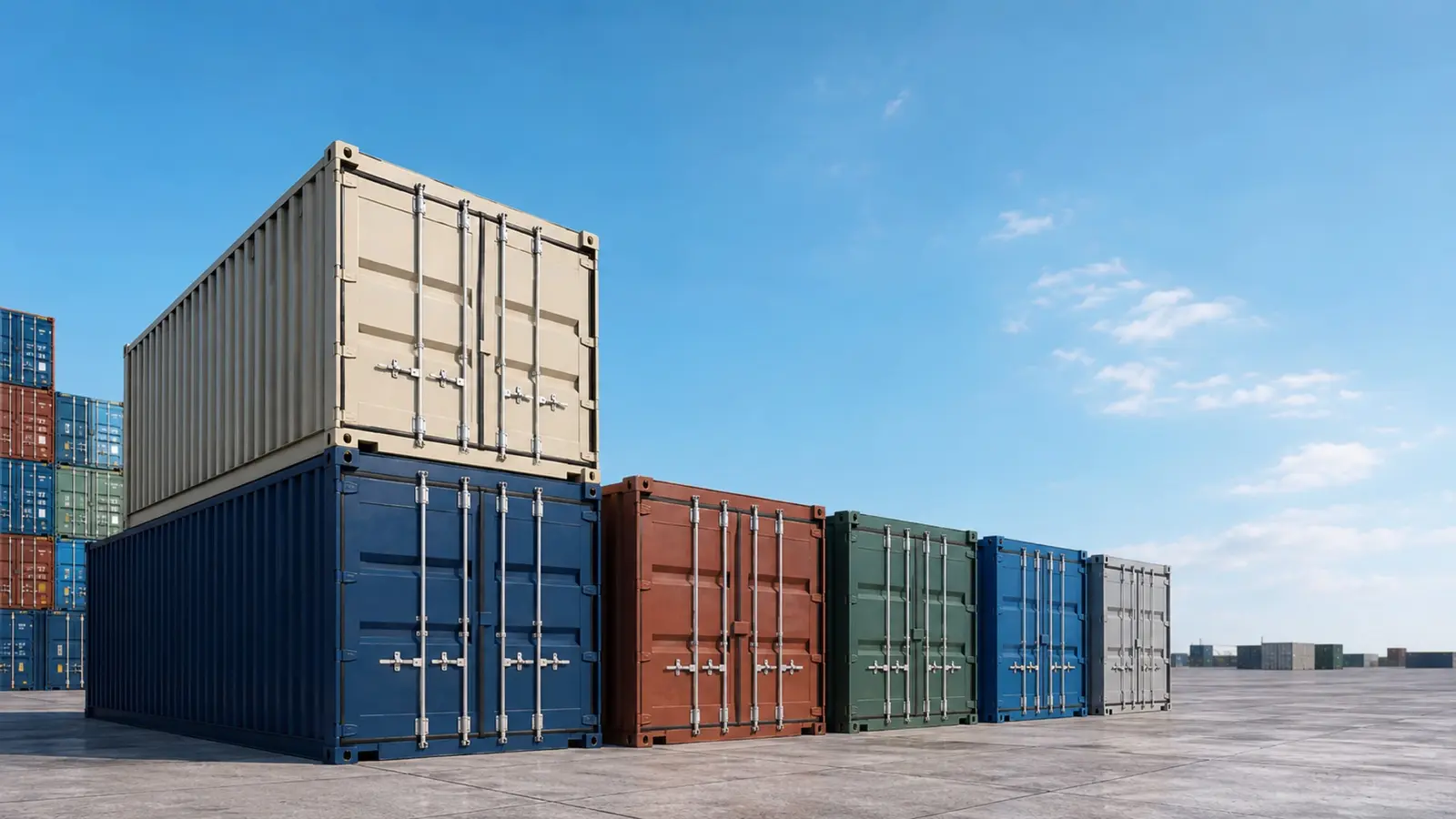
A comprehensive guide to choosing among 20-foot, 40-foot, High Cube and special equipment by considering cargo characteristics, site conditions, budget and operational flow. Rather than recommending one product in isolation, this guide explains how to build the decision. A sound container selection decision brings cargo characteristics, real site movement, the delivery chain, budget limits and risk appetite into one framework. Even when the nominal equipment type is right, missing plans for power, ground, access, documentation or ownership will prevent the operation from reaching its intended performance.
Drawing on Penta Container’s experience in sales, rental, leasing, storage, repair, maintenance and modification, the content provides a working control framework for procurement teams as well as logistics, production, quality and site managers. Each section explains the technical logic, identifies a frequent mistake and ends with a control action that can be used on site. The article therefore becomes more than background reading: it can support quotation reviews, project meetings and handover checks.
Define the need before naming the equipment
cargo characteristics, daily movement count and intended period of use is one of the technical starting points for sound container selection. The goal is not simply to place cargo inside a steel box; it is to make the chain predictable from receipt and protection to site movement and final handover. The subject of define the need before naming the equipment gives procurement, logistics, site and safety teams a shared assumption set. Without that common language, even correctly specified equipment can miss the intended time, cost or safety outcome.
A common mistake is selecting a model out of habit. It may appear to save time initially, but can later create extra handling, waiting, damage checks or an equipment change. For a model such as the 20 Dry Container, the product’s technical limits must be read together with site conditions and transport method. Only after those requirements are explicit does the quoted price become genuinely comparable across suppliers and alternatives.
A practical response is to bring the cargo list, site sketch and delivery schedule into one decision table. Record evidence as dimensions, quantities, dates, photographs and named owners wherever possible. Every assumption should have a source, and a change should trigger review of the affected delivery, budget and risk items. Penta Container aligns that verification with stock and delivery planning so the selection works in the real operation, not just on a specification sheet.
Comparing 20-foot and 40-foot units
Comparing 20-foot and 40-foot units normally needs an answer before commercial comparison begins in a container selection process. When teams assess the balance between compact manoeuvrability and high-volume efficiency, they must look beyond the nominal product label and understand how the unit will actually be used. Daily handling frequency, loading equipment, seasonal conditions and user behaviour can all change the preferred result. A technical specification is therefore not static boilerplate; it is a concise summary of verified site data.
looking only at external length is a major risk at this stage. When it occurs, the difficulty often sits in the process around the container rather than in the container itself. Checking door approach, clearances, maintenance access and safe working space for the 40 HC Container strengthens both productivity and worker safety. If those checks happen after delivery, the available remedies narrow while the cost of change increases.
Teams should therefore verify internal volume, door opening and transport route together. The finding should not end with a simple pass or fail; conditional acceptance points, follow-up dates and decision owners must be written down. Quote, dispatch and receiving teams can then work from one data set. A measurable approach supports transparent comparison among supply options and allows the project to adapt to changing requirements without losing control.
When does High Cube create value?
the capacity created by extra internal height for light, bulky goods directly influences the assessment of when does high cube create value?. Container operations connect many small decisions: a few centimetres of clearance, a short power interruption, late ground preparation or one missing document can stop a much larger workflow. For that reason, container selection should be treated as end-to-end operational design rather than a catalogue choice.
mistaking extra height for extra weight capacity is not a safe planning assumption. The 40 DC Open Side Container may appear technically suitable, yet the overall solution remains fragile if cargo, route or site has not been verified. A resilient plan is built for normal variation, not just an ideal day. Defining an alternative delivery window, backup unit or different layout in advance reduces decision time when an exception occurs.
The practical action is to check pallet height and stacking plan with a scaled layout. That record makes the boundaries of responsibility visible to supplier, customer and site teams. When every control has an acceptance criterion, evidence and action, quality no longer depends on personal interpretation. The result is fewer surprises, a more reliable budget and stronger operational continuity, particularly when multiple containers must enter service at the same time.
Doors and access scenarios
A healthy approach to doors and access scenarios starts by treating how standard end doors, double doors and open-side access affect workflow as project input. As an operation scales, small uncertainties multiply with unit count; an issue manageable on one container can challenge the schedule and capacity of a whole fleet. Model, condition and commercial method should therefore be assessed as connected choices rather than separate procurement lines.
overlooking forklift approach distance can have material consequences on site. A poor assumption returns as extra transport, reloading, cargo waiting, unplanned maintenance or safety exposure. The value of the 20 Dry Container becomes real only when the equipment is supported by operating instructions, environmental controls and clear responsibilities. Technical compatibility and operational feasibility are not identical; a good project demonstrates both.
For a controlled outcome, teams should simulate loading direction together with on-site traffic flow. The verified information must then flow into the quotation and order documentation and be checked again during site handover. This closed loop protects the original decision through execution. When lessons are recorded and applied to the next order, container use becomes faster, safer and more cost-effective across the organisation.
Standard solutions for dry cargo
the role of 20 Dry and 40 Dry models in general storage and transport is one of the technical starting points for sound container selection. The goal is not simply to place cargo inside a steel box; it is to make the chain predictable from receipt and protection to site movement and final handover. The subject of standard solutions for dry cargo gives procurement, logistics, site and safety teams a shared assumption set. Without that common language, even correctly specified equipment can miss the intended time, cost or safety outcome.
A common mistake is judging condition only by exterior paint. It may appear to save time initially, but can later create extra handling, waiting, damage checks or an equipment change. For a model such as the 40 HC Container, the product’s technical limits must be read together with site conditions and transport method. Only after those requirements are explicit does the quoted price become genuinely comparable across suppliers and alternatives.
A practical response is to inspect door seals, floor, roof and corner posts. Record evidence as dimensions, quantities, dates, photographs and named owners wherever possible. Every assumption should have a source, and a change should trigger review of the affected delivery, budget and risk items. Penta Container aligns that verification with stock and delivery planning so the selection works in the real operation, not just on a specification sheet.
Correct equipment for special cargo
Correct equipment for special cargo normally needs an answer before commercial comparison begins in a container selection process. When teams assess differences among Open Top, Flat Rack and Platform for out-of-gauge cargo, they must look beyond the nominal product label and understand how the unit will actually be used. Daily handling frequency, loading equipment, seasonal conditions and user behaviour can all change the preferred result. A technical specification is therefore not static boilerplate; it is a concise summary of verified site data.
calculating over-dimensional limits after booking transport is a major risk at this stage. When it occurs, the difficulty often sits in the process around the container rather than in the container itself. Checking door approach, clearances, maintenance access and safe working space for the 40 DC Open Side Container strengthens both productivity and worker safety. If those checks happen after delivery, the available remedies narrow while the cost of change increases.
Teams should therefore define centre of gravity and lashing points during quotation. The finding should not end with a simple pass or fail; conditional acceptance points, follow-up dates and decision owners must be written down. Quote, dispatch and receiving teams can then work from one data set. A measurable approach supports transparent comparison among supply options and allows the project to adapt to changing requirements without losing control.
Temperature-controlled products
selecting reefer equipment by product temperature, airflow and power needs directly influences the assessment of temperature-controlled products. Container operations connect many small decisions: a few centimetres of clearance, a short power interruption, late ground preparation or one missing document can stop a much larger workflow. For that reason, container selection should be treated as end-to-end operational design rather than a catalogue choice.
treating the reefer as a rapid product-freezing device is not a safe planning assumption. The 20 Dry Container may appear technically suitable, yet the overall solution remains fragile if cargo, route or site has not been verified. A resilient plan is built for normal variation, not just an ideal day. Defining an alternative delivery window, backup unit or different layout in advance reduces decision time when an exception occurs.
The practical action is to include pre-cooling, set point and monitoring records in the plan. That record makes the boundaries of responsibility visible to supplier, customer and site teams. When every control has an acceptance criterion, evidence and action, quality no longer depends on personal interpretation. The result is fewer surprises, a more reliable budget and stronger operational continuity, particularly when multiple containers must enter service at the same time.
Site conditions and ground preparation
A healthy approach to site conditions and ground preparation starts by treating placing the container on level, load-bearing ground with proper drainage as project input. As an operation scales, small uncertainties multiply with unit count; an issue manageable on one container can challenge the schedule and capacity of a whole fleet. Model, condition and commercial method should therefore be assessed as connected choices rather than separate procurement lines.
leaving corner castings at different levels can have material consequences on site. A poor assumption returns as extra transport, reloading, cargo waiting, unplanned maintenance or safety exposure. The value of the 40 HC Container becomes real only when the equipment is supported by operating instructions, environmental controls and clear responsibilities. Technical compatibility and operational feasibility are not identical; a good project demonstrates both.
For a controlled outcome, teams should measure access, rainwater flow and door swing clearance before placement. The verified information must then flow into the quotation and order documentation and be checked again during site handover. This closed loop protects the original decision through execution. When lessons are recorded and applied to the next order, container use becomes faster, safer and more cost-effective across the organisation.
Purchase, rental or leasing
the relationship between usage period, capital and operational flexibility is one of the technical starting points for sound container selection. The goal is not simply to place cargo inside a steel box; it is to make the chain predictable from receipt and protection to site movement and final handover. The subject of purchase, rental or leasing gives procurement, logistics, site and safety teams a shared assumption set. Without that common language, even correctly specified equipment can miss the intended time, cost or safety outcome.
A common mistake is comparing only the monthly price. It may appear to save time initially, but can later create extra handling, waiting, damage checks or an equipment change. For a model such as the 40 DC Open Side Container, the product’s technical limits must be read together with site conditions and transport method. Only after those requirements are explicit does the quoted price become genuinely comparable across suppliers and alternatives.
A practical response is to evaluate total cost of ownership and exit scenario together. Record evidence as dimensions, quantities, dates, photographs and named owners wherever possible. Every assumption should have a source, and a change should trigger review of the affected delivery, budget and risk items. Penta Container aligns that verification with stock and delivery planning so the selection works in the real operation, not just on a specification sheet.
Condition and technical inspection
Condition and technical inspection normally needs an answer before commercial comparison begins in a container selection process. When teams assess interpreting new, cargo-worthy and wind-and-water-tight grades by intended use, they must look beyond the nominal product label and understand how the unit will actually be used. Daily handling frequency, loading equipment, seasonal conditions and user behaviour can all change the preferred result. A technical specification is therefore not static boilerplate; it is a concise summary of verified site data.
treating certification and physical inspection as alternatives is a major risk at this stage. When it occurs, the difficulty often sits in the process around the container rather than in the container itself. Checking door approach, clearances, maintenance access and safe working space for the 20 Dry Container strengthens both productivity and worker safety. If those checks happen after delivery, the available remedies narrow while the cost of change increases.
Teams should therefore keep documents, photographs, checklist and serial number in one file. The finding should not end with a simple pass or fail; conditional acceptance points, follow-up dates and decision owners must be written down. Quote, dispatch and receiving teams can then work from one data set. A measurable approach supports transparent comparison among supply options and allows the project to adapt to changing requirements without losing control.
Delivery and positioning
how truck, sidelifter, crane and site access affect model choice directly influences the assessment of delivery and positioning. Container operations connect many small decisions: a few centimetres of clearance, a short power interruption, late ground preparation or one missing document can stop a much larger workflow. For that reason, container selection should be treated as end-to-end operational design rather than a catalogue choice.
selecting the unit and leaving delivery method until last is not a safe planning assumption. The 40 HC Container may appear technically suitable, yet the overall solution remains fragile if cargo, route or site has not been verified. A resilient plan is built for normal variation, not just an ideal day. Defining an alternative delivery window, backup unit or different layout in advance reduces decision time when an exception occurs.
The practical action is to verify route width, turning circle and lifting plan in advance. That record makes the boundaries of responsibility visible to supplier, customer and site teams. When every control has an acceptance criterion, evidence and action, quality no longer depends on personal interpretation. The result is fewer surprises, a more reliable budget and stronger operational continuity, particularly when multiple containers must enter service at the same time.
Decision checklist
A healthy approach to decision checklist starts by treating combining technical fit, cost, time and risk in one approval process as project input. As an operation scales, small uncertainties multiply with unit count; an issue manageable on one container can challenge the schedule and capacity of a whole fleet. Model, condition and commercial method should therefore be assessed as connected choices rather than separate procurement lines.
departments acting on different assumptions can have material consequences on site. A poor assumption returns as extra transport, reloading, cargo waiting, unplanned maintenance or safety exposure. The value of the 40 DC Open Side Container becomes real only when the equipment is supported by operating instructions, environmental controls and clear responsibilities. Technical compatibility and operational feasibility are not identical; a good project demonstrates both.
For a controlled outcome, teams should close procurement, logistics, site and safety approvals in one shared record. The verified information must then flow into the quotation and order documentation and be checked again during site handover. This closed loop protects the original decision through execution. When lessons are recorded and applied to the next order, container use becomes faster, safer and more cost-effective across the organisation.
Conclusion: the right equipment creates value through a verified process
Every point covered in how to choose the right container: size, cargo and operations guide leads to the same conclusion: a container alone is not the solution. The solution combines the right product and condition with the appropriate commercial model, planned delivery and disciplined use. Collecting technical data early, making assumptions visible and assigning responsibilities in writing reduces both total cost and operational risk.
The next step is to share cargo and site information with Penta Container so current stock, alternative products and delivery options can be compared in one proposal. Review technical explanations on the relevant product pages, explore similar applications in our projects, or contact our specialist team directly.